

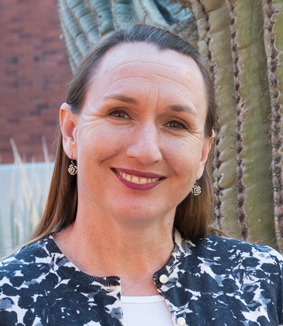
 My name is Laura Kerry–Henkel and I am approaching the final phases of completing a Ph.D. in School Psychology. I am working on my dissertation and will be starting an internship in the fall. I expect to graduate in May 2016. I am pursuing this degree because I am committed to working in public schools, and I feel that my education will help me to become a strong resource and advocate for children and families who need additional academic and social-emotional supports. In my capacity as a school psychologist, I can help teachers and administrators to provide strong academic and social supports to all students, to identify and support students who need additional help, and to pinpoint areas of difficulty and potential interventions for those students with the most needs. As a school psychologist, I will also be able to support individual students and small groups with counseling and social skills lessons.
On a personal note, I believe that I qualify as having overcome obstacles for a couple of reasons. Firstly, I was raised in a pretty typical middle-class family, but everything changed in the summer of 1984 when my 16-year-old sister committed suicide. I was 13 years old, and suddenly everything changed. I started making wrong choices to deal with the pain, including using and abusing alcohol and drugs. I was on a tear for about five years before I realized that I needed to stop and figure out something else to do. My behavior was embarrassing, and I could not control what would happen when I was using. I ended up going into drug and alcohol rehab at the tender age of 18. I have been clean and sober since April 10, 1989.
In the years since I have gone to school—a long time—and become a special education teacher in the hopes of helping kids who need the most support. A few years ago I decided that I wanted to do something different but still wanted to work with children in the public schools, so I began pursuing a Ph.D. degree in school psychology. I consider myself a non-traditional student because I started the Ph.D. program at the age of 39 and had four young children. Also, I have had to work full-time throughout my graduate program. Finishing my degree will be a huge milestone in my life, and I hope to continue to do good work for students in schools, in addition to modeling a physically and emotionally healthy life for my children.
We are proud to announce Laura Kerry–Henkel is one of the current DiversityJobs Scholarship finalists. Vote for her essay (Facebook ‘Like’ and other social media sharing options in left column), click the ‘heart’ just above comments section below, and/or leave comments of support to help us with the selection process.
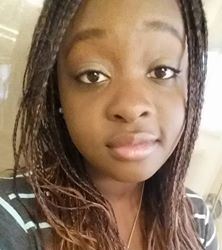
 Until about age 10, whenever someone asked me what I wanted to be when I grew up, I alternated between a doctor and a lawyer. I suppose that’s because two of my role models were my pediatrician Pamela Black, and my immigration lawyer Gloria Goldman. These women were quite similar. They were both so tall and confident. Even at 6, I just knew they were incredibly intelligent. Dr. Black could ask me some random questions, poke and prod for a minute, then exactly determine what was wrong. It was like she was solving one of those 500 piece puzzles in her head but she didn’t even have the box to look at. And she made me feel better. Plus she got to work with kids, and I love babies. My parents also approved, so I figured that I should be a pediatrician. Decision made, life was good.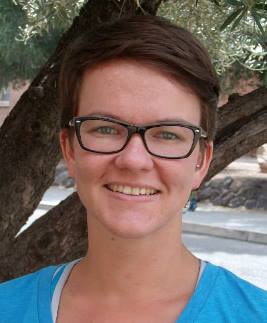
 Drought in the American West has thrown water conservation into the spotlight. Average citizens are becoming more aware of water issues, and as a resident of Southern Arizona and a believer in individual advocacy and education, I believe that this cultural shift is long overdue. As water levels in Lake Mead continue to drop, Arizona is threatened by a reduction of its allotment of the water supply. My concern for the future water security of the Southwest inspired me to pursue a career in hydrology.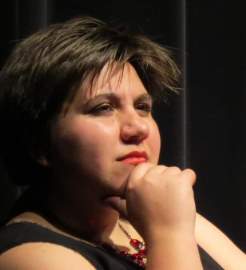
 When I was a sophomore in high school, I had the pleasure of participating in a psychology seminar. In the comprehensive study of psychology in Colorado, we learned basic neuroscience and structure and created experiments to test perception in rats. I immediately fell in love with the study of the brain. It was both humbling and invigorating, and I knew I wanted to continue my work in psychology. I also was actively involved in theater throughout high school. Acting became my escape–an outlet to safely release frustration and joy, and to entertain others.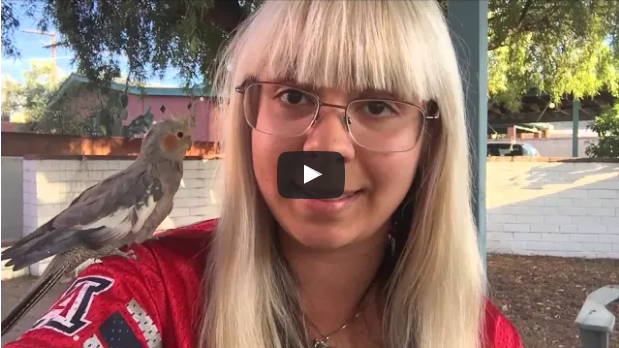

 I wanted to do something with the movies the moment I watched Hitchcock’s ‘The Birds’ at six years old. I remember thinking wow, something so horrifying, so unsettling, now that’s a career for me, that’s exciting. But in fact, in many ways I think what interests me about the movies is the fact that, let’s be honest, they show us things we don’t want to see. Whether it be birds or, I don’t know, the squalor of a candidate’s room. I chose film because I had come to see this was a medium unlike any other, and it fit my interests, it fit my identity.


 My parents have been pushing me toward the engineering field since I was a child. They sent me to summer engineering camps, signed me up for youth engineering courses, and even coaxed me into taking an engineering design course in high school. I always pushed back. I had no interest in pursuing a field so dominated by men. It wasn’t until college, however, that I realized why they pushed me. Not only did engineering fit my proud-to-be-nerdy personality but by pursuing a field so untouched by other women, I have a great opportunity to show myself and other people that everyone can be intellectually competitive.
